Blog

exercise-sneaker-legs-1200x800.jpg

June 7, 2018 0

The historical foundation that produced the concepts of mind and body can be traced back to the ancient Greek frameworks of Aristotle and Plato. Plato believed the body and soul are two separate entities and mastered the understanding of the soul. On the contrary, Aristotle believed that the two entities are intertwined and belong together in which one cannot exist optimally without the other [1], and focused his understanding mainly in the mind. Although these two are separate and contradicting theories, they both agree that the mind is the connection between the body and the soul. 

A seventeenth-century French philosopher figure Rene Descartes theorized the distinction between the mind and the body, where it was not unusual to view the “mind” separately from the “body.” The differentiation was that the mind was seen as the concern of organized religion, while the body was seen as the concern of physicians[1]. This served the preeminent principle in a separation between the so-called “mental” and “physical” health. With advancement in technology, the twentieth century has recognized remarkable development in the understanding of mental disorders and the brains. There is a growing realization of the centrality of mental health to overall health and well-being.

The mind and the body not only influence each other, they are each other.

As Socrates says in the Lesser Hippias, “You will do me much greater benefit if you were to cure my soul of ignorance, than you would if you were to cure my body of disease[1].”

Fundamental Connection

Before we begin to explore further, it is important to understand the term “health.” The World Health Organization (WHO) defines health as a state of complete physical, mental, and social well-being and not merely the absence of disease or infirmity[2].

Everything that evolved around you –the beliefs you hold of yourself, your emotions, memories, environment, and habits—can have an influence on your mental and physical health. The connections between what is going on in your mind and what is happening in your body form the psycho-emotional roots of health and illness.

The mind-body connection appears on both physical and chemical levels. The brain is the headquarter that allows you to experience mental states that are labeled as “mind”.

  • The concept of the mind comprises of mental states of thoughts, beliefs, attitudes, and emotions.
  • Depending on different mental states, they can have positive or negative effect on the biological functioning of the body.
  • This happens since the nervous, endocrine, and immune systems share a common chemical language, which allows constant communication between the mind and body through messengers like hormones and neurotransmitters[3].

  • As an example, neurological pathways connect parts of the brain that process emotions with the spinal cord, muscles, cardiovascular system, and digestive tract[3]. Any major life events, stressors, or emotions are able to trigger physical symptoms via these pathways.
  • You may have experienced this aspect of the mind-body connection when you are nervous and get the butterflies feeling in your stomach, or during intense stress moment where you feel as if your heart is pounding out of your chest.

Physical & Mental 

  • Mind and body are certainly connected. How? Well, think about what happens when you become ill, and for this instance you came down with a flu. You run a high fever and feel as if your whole body is breaking in half, not only your body, but your mind doesn’t seem to work as well. When having a flu, it’s advised to rest as much as possible, increase fluid intake and consume light food in order to feel better.

  • Now, think about going to work or school or doing any activities when you are in this state. You would be lucky if you did not pass out, but others around you would not be as lucky as you as their chances of catching the flu have increased. Besides, you could have ended up in the hospital for extended care when you have exerted too much of your body when it needs extra rest, not extra work.

  • This is very similar to mental health problems, for example you are diagnosed with depression. The only thing you would want to do is to rest and not physically do anything. But that’s not the right way to self-care. Self-care in this case would be to see a licensed therapist, take your prescribed medication, and follow the treatment plan or engage in physical activity.

  • A well-balanced lifestyle helps eliminate unnecessary mental and health problems. Taking care of oneself by allowing yourself to get a good night sleep, eat healthy meals, exercise regularly, follow treatment plans (if any) and take medications as told will help you be ready to tackle life, and  stay both physically and mentally healthy.
  • You can think of it as if you are working out in the gym. If you only focus on one of your muscles, let’s say your bicep. Yes, you would have strong biceps, but what about your other muscles? If you only work on one muscle, you would only have one strong muscle. At the same time, you could focus on all your muscles equally and have a stronger body instead of just one stronger muscle.

Did you know…?

When dealing with any psychiatric or medical disorders, exercise is most definitely the last thing on your to-do list. Interesting enough, exercise should be one of the things that belong on top of your to-do list. There are many benefits from engaging in physical activities. But before we go into the good stuff, allow me to explain why you should squeeze in exercising time in your busy schedule.

Everyone knows regular exercise is beneficial to the body and it helps trim that waistline, cut down the extra pounds, and build that abs that you have always dreamt of. BUT, did you know that exercise is also one of the most effective methods to improve mental health? And no, exercising does not mean only to go to the gym and run on treadmill or lift heavy weights. Any physical activities such as gardening, walking around the block with your lovely pets, using stairs instead of elevator or simply engaging in other less intense activities are considered exercise. All in all, pretty much anything that gets you off the couch. Impact of exercise on mental health is underrated, but benefits of physical activity on mental health are quite extensive.

Regular exercise can have a profoundly positive impact on mental disorders including depression, anxiety, ADHD etc[4]. It can relieve stress, improves memory, helps with sleep, and boosts overall mood. Exercise is not always about the muscle size and aerobic capacity. It gives an enormous sense of well-being and healthy living.

  • Stress relief
Stress relief

  • When you are under stress, your body begins to give a different feel from when you are in normal state. Your muscles become tense, especially in the face, neck and shoulders areas, leading to back or neck pain and painful headaches. You may also feel a tightness in your chest, a pounding pulse, or muscle cramps. With stress, it is possible to experience insomnia, heartburn, stomachache, diarrhea and such. The discomforts and worries can eventually lead to chronic depression and the continual of the cycle.[4]
  • Exercise is a great natural stress relief and an effective way to break this vicious cycle. During exercise, your body releases a chemical called endorphins. Endorphins interact with the receptors in your brain that reduce your perception of pain and stress[4]. They also trigger a positive feeling in the body.
  • In a study done by James Blumenthal, PhD, a clinical psychologist at Duke University, Blumenthal and his colleagues assigned sedentary adults with major depressive disorder to one of the four groups: supervised exercise, home-based exercise, antidepressant therapy, and a placebo pill.
    • After four months of treatment, Blumenthal found that patients in the exercise and antidepressant groups had higher rates of remission than did the patients on the placebo.
      • He concluded that exercise was generally comparable to antidepressants for patients with major depressive disorder.
      • Blumenthal followed up with the patients one year later. The type of treatment they received during the four-month trial didn’t predict remission a year later.
      • However, subjects who reported regular exercise at the one-year follow-up had lower depression scores than did their less active counterparts. In which he said, “Exercise seems not only important for treating depression, but also in preventing relapse.”[4]

  • Boost your happiness and lower anxiety
Boost your happiness and lower anxiety

  • As well as reducing the perception of pain and stress, endorphins create feelings of happiness and euphoria. Following a run or workout, many often described the feeling as “euphoric.” This feeling is known as a “runner’s high,” because they are accompanied by a positive and energizing outlook on life[5]. With that being said, exercise can alleviate symptoms of depression or anxiety. Instead of depending on medication, exercise can be your effective (and natural) antidepressant pills.
  • When we are spooked or threatened, our nervous system jumps into action, setting off a cascade of reactions such as sweating, dizziness, and a racing heart. People with heightened sensitivity to anxiety respond to those sensations with fear[5]. They are also more likely to develop panic disorder down the road, according to Jasper Smits, PhD, Co-Director of the Anxiety Research and Treatment Program at Southern Methodist University.
  • Smits suggested that regular workouts might help people prone to anxiety become less likely to panic when they experience those fight-or-flight sensations.
    • After all, the body produces many of the same physical reactions in response to exercise.
      • They tested their theory among 60 volunteers with heightened sensitivity to anxiety.
        • Subjects who participated in a two-week exercise program showed significant improvements in anxiety sensitivity compared with a control group.
        • People learn to associate the symptoms with safety instead of danger.
        • The findings suggest that physical exercise could help to ward off panic attacks[5].

  • Reduce ADHD
Reduce ADHD

  • Studies have shown that regular exercise improve concentration, motivation, memory, and mood.
  • Exercising boosts the brain released of dopamine, norepinephrine, and serotonin levels –in all of which affect focus and attention.
  • More specifically, getting sweaty increases production of cells in hippocampus responsible for memory and learning[6].
  • Because of this, exercise can be a replacement of Ritalin and Adderall medications.

  • Prevent cognitive decline — Dementia and Alzheimer’s
Prevent cognitive decline — Dementia and Alzheimer’s

  • Truth hurts, but as we get older, our brains get a little fuzzy. As aging and degenerative diseases like Alzheimer’s kill of brain cells, the noggin actually shrinks, losing many important brain functions in the process[7]. While exercise cannot cure the disease, it can help the brain slow down the cognitive decline.
  • Levels of the essential nutrient, choline, rise with an increased loss of nerve cells – a marker of Alzheimer’s disease.
  • Last year, researchers at Goethe University Frankfurt had senior volunteers (aged 65-85) ride a stationary bicycle three times a week for thirty minutes over a twelve-week period; the control group did not exercise.
    • The exercising group experienced stabilized choline levels, while the control saw an increase in this metabolite[7].
  • Another study from 2013 stresses the importance of cardiovascular exercise. Art Kramer, a neuroscientist who directs the University of Illinois’s Beckman Institute for Advanced Science and Technology, directed one group of older adults to exercise moderately for 45 mins, three times a week.
    • The control group ended up losing 1.5 percent of brain volume, while the exercising group increased brain volume by 2 percent[7]. This increased volume resulted in better memory scores.

  • Build self-confidence
Build self-confidence

  • Physical activity can boost self-esteem and improve positive self-image.
  • Regardless of weight, size, gender, or age, exercise can quickly elevate a person’s perception of his or her attractiveness, that is, self-worth[8].

  • Lastly, the most obvious reason: better sleep!
Lastly, the most obvious reason: better sleep!

  • After running 30 minutes on treadmill or a session of any kind of exercising, your body feels relaxed.
  • A moderate workout can be the equivalent of a sleeping pill, ever for people with insomnia[5].
  • Physical activity raises the body’s core temperature. When the body temperature drops back to normal, it signals the body that it’s time to sleep!
  • Exercise promotes better sleep.

  • References
  • References 2

[1] Burton, N., M.D. (2010, March). Plato and Aristotle on health and disease. Psychology Today. Retrieved from https://www.psychologytoday.com/us/blog/hide-and-seek/201203/plato-and-aristotle-health-and-disease

[2] Connection Between Mental and Physical Health. (n.d.). Retrieved from http://ontario.cmha.ca/documents/connection-between-mental-and-physical-health/)

[3] Weinberg, J., M.D. (2018, Feb). Mind-Body Connection: Understanding the Psycho-Emotional Roots of Disease. Retrieved from https://chopra.com/articles/mind-body-connection-understanding-the-psycho-emotional-roots-of-disease

[4] Bhandari, S., MD. (2018, February 21). Exercise and Depression. Retrieved from https://www.webmd.com/depression/exercise-depression

[5] Breene, S. (2013, October 7). 13 Unexpected Benefits of Exercise. Retrieved from https://greatist.com/fitness/13-awesome-mental-health-benefits-exercise

[6] Robinson, L., Segal, J., Ph.D, & Smith, M. (2018, March). The Mental Health Benefits of Exercise. Retrieved from https://www.helpguide.org/articles/healthy-living/the-mental-health-benefits-of-exercise.htm

[7] Beres, D. (2018, February 27). Can exercise prevent dementia? Retrieved from http://bigthink.com/21st-century-spirituality/does-lack-of-exercise-lead-to-dementia

[8] Weir, K. (2011, December). The Exercise Effect. American Psychological Association. Retrieved from http://www.apa.org/monitor/2011/12/exercise.aspx



adorable-animal-canine-133069-1200x800.jpg

April 9, 2018 0

When was the last time you got 8 hours of sleep? Needed an extra cup of coffee this morning? Learn about the importance of sleep to our mental health and ways to improve your quality of sleep.

Living in the fast-paced 21st century, where busy schedules and endless to-do lists are typical, we tend to deprioritize sleep. We do not realize that we are making one of the biggest mistakes that potentially result in long-term health problems. Without sleep, our bodies cannot function in proper manners and contributes to mental health disorders and memory & learning impairment.

So, what is “sleep?”

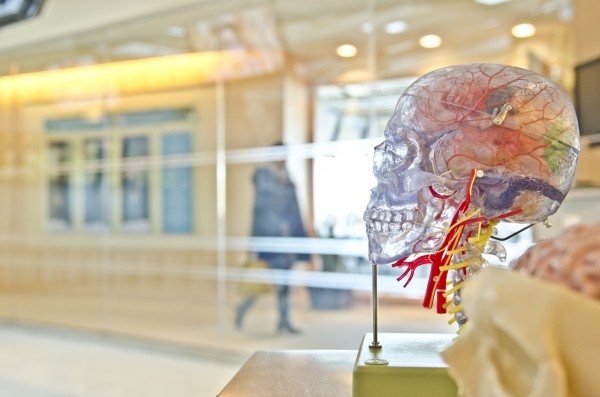
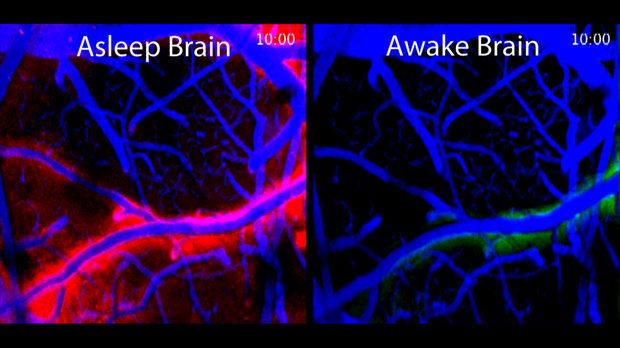
Sleep allows you to physically be unconscious while your brain is mentally active. During sleep, our brains are working to process and restore the information that we retrieve from the time we were awake[1]. After a good night sleep, we are able to retain information and dramatically perform better on the next day. Sleep is taken for granted because many of us overestimate our abilities to fulfill daily duties. We are not aware that sleep is fundamental for a healthy mind, body, and soul.


[Photo courtesy University of Rochester Medical Center]

You may be wondering…what happens to our brain and body during sleep?

Neurotransmitters are chemical messengers which communicate between neurons throughout your brain and body. By acting on different groups of neurons in the brain, neurotransmitters regulate whether we are asleep or awake. They can “switch off” cells that signal the activation of arousal or relaxation.

  • The arousal signals are sent to the cerebral cortex when the alerting areas of the brain are most active, resulting in wakefulness.[2]
  • Areas of the brain that promotes wakefulness is inhibited when the sleep-promoting areas of the brain are most active, resulting in sleepiness.[2]

The Sleep Cycle

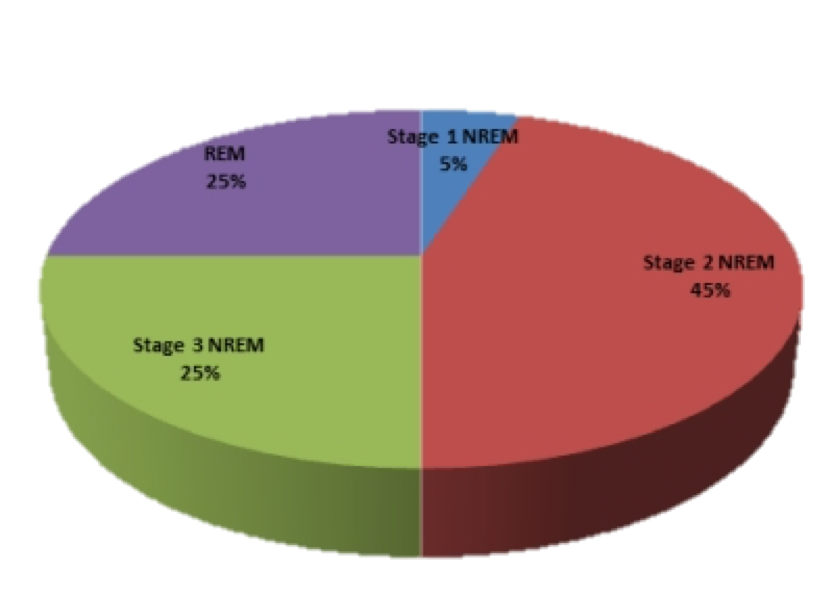
Sleep is not just one “snoozed off” action, but it occurs in stages and it is quite complicated. During sleep, the brain and body go through five stages; the non-rapid eye movement (non-REM) phrase includes the first four stages and the rapid eye movement (REM) phrase is the fifth stage.

  • Stages 1 – 2
Stages 1 – 2

As we shut our eyes to sleep, we enter stage 1 of the sleep cycle.

  • It is known as light sleep linking between being awake and falling asleep where eyes movements and muscle activity become weak and begin to move slow.
  • During this stage it is normal to experience hypnic myoclonia or hypnic jerks where the muscle contractions happen suddenly and gives a sensation of falling [3].
  • This stage typically lasts about 5 to 10 minutes.

When there are very minimal to no eyes movements, we’ve made it to stage 2.

  • This stage marks the actual onset of sleep when you become disengaged from the environment [3].
  • The body temperature continues to decrease, but heart rate and blood pressure are regular.

  • Stages 3 – 4
Stages 3 – 4

We then continue to stages 3 and 4 or as known as the deep non-REM.

  • These are the most difficult stages to wake someone up as the body begins the restorative process where blood pressure begins to drop, breathing becomes even slower and muscles are relaxed.
  • During these deep stages, blood supply to the muscles is increased, energy is restored, tissue growth and repair occur and important hormones are released for growth and development [3].

  • Stage 5
Stage 5

We enter REM sleep when breathing and heart rate become irregular, muscles are shut down becoming paralyzed, and eyes movements are rapid.

  • This is the stage where the brain is active and dreams come into play.
  • It is important to get enough REM sleep because it plays an important role in learning and memory function
  • It is the time for your brain to consolidate and process information from the day before in order to stored it in the long-term memory [3].

[Photo courtesy Luke Mastin]

Approximately, we experience three to four sleep cycles. The sleep cycle repeats itself every 60- 90 minute [6] in that appropriate 8 hours that we are supposed to get. During the first 2-3 cycles, we spend more time in the deep non-REM sleep, stages 3-4. REM sleep occurs more frequently in the last 2-3 cycles[4].

Now, what happens when you’re in sleep debt?

Sleep is not a luxury, but a crucial component of our daily lives. We spend one third of our lives asleep. Yet, many of us cannot get 8 hours of quality sleep for various reasons, putting ourselves in sleep debt.

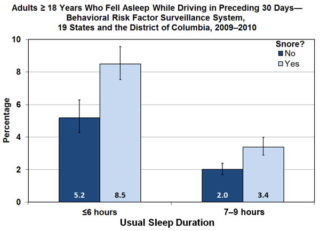
When in sleep debt, parts of your brain become inactive which induces drowsiness. One to four percent of all highway accidents are caused by sleepiness; that’s about 100,000 crashes, 71,000 injuries and 1,550 deaths each year in the USA  [1].


[Photo courtesy Wheaton AG, Chapman DP, Presley-Cantrell LR, Croft JB, Roehler DR.]

Lack of sleep causes the body to respond as if you were under stress. When under stress, Dr. Malcolm von Schantz explains that the body automatically activate inflammatory genes preparing for injury to occur [8]. In the case of sleep-deprivation, there is no actual injury. Genes in the body’s cells function improperly when one is sleep-deprived which produce negative health problems including:

  • high blood pressure
  • diabetes
  • heart diseases
  • depression
  • lower sex drive

According to Dr. Kushida, director of the Standford University Center for Human Sleep Research,

loss of sleep ultimately leads to memory and learning impairment due to the disturbances in brain function when adequate sleep is not met [9]Furthermore, sleep-deprived physically makes you look bad by giving you the premature wrinkling and dark circles under your eyes. Without sleep, stress hormone cortisol is produced, and it can eventually break down collagen and causes skin problems [8]. They called it “beauty sleep” for a reason.

Tips & Tricks for Better Sleep

  • Keep Track of Your Sleep
  • Exercise Daily
  • Naps are a big NO NO!
  • Avoid Drinking Coffee, Smoking, and Heavy Meals Before Bed
  • Eliminate Electronic Devices
  • Evaluate Your Bedroom
  • When in Doubt, Meditate!
  • Seek Professional Help
Keep Track of Your Sleep

  • Try sticking to the same bedtime and wake-up time throughout the week (even on weekend!).
  • Keeping track of your sleep schedule in a notebook could be helpful.
  • Dr. Matthew Ebben, a psychologist and specialist in sleep medicine, suggests that sleep diary is a wealth of information that includes not just when you sleep and wake up, but intake of caffeine, medications, alcohol, nap, exercise, and mood.
  • It is a useful tool to help many realize what they are doing that encourage them to deprioritize sleep[10].

Exercise Daily

  • Find time in your busy schedule to fit in a minimum of 15-30 mins of exercise.
  • Even if it’s just light exercise, it is still better than nothing.
  • Exercise reduces stress by producing endorphins or as known as natural painkillers which in turn improve the ability to sleep[11].
  • Get moving!

Naps are a big NO NO!

  • Napping is great for quick energy, but if you are having trouble falling asleep at night, you should definitely avoid any nap times during the day.
  • Long naps interfere with your body clock and nighttime sleep.

Avoid Drinking Coffee, Smoking, and Heavy Meals Before Bed

  • These behaviors can disrupt sleep because of the caffeine, nicotine and the discomfort feeling.
  • It is wisely suggested that you should have your last meal two to three hours before your bedtime [12].
  • Limiting caffeine intake throughout the day can dramatically improve your sleep.
  • Caffeine is a stimulant that we take to feel and remain alert during the day but it delays the timing of your body clock that will make it hard to fall asleep when the time comes.

Eliminate Electronic Devices

  • Not only do electronic devices distract you from your sleep, but the light exposure can interfere with melatonin.
  • You can still use your phone or tablet to read or do anything, but dim the light down to minimum and hold them at least 14 inches away from you [13]

Evaluate Your Bedroom

  • Many find that having a comfortable setting can help them fall asleep easier and getting more quality sleep.
  • Bedroom should not be too hot or too cold, it should be around 60-67 degrees [14].
  • Make sure the room is kept dark and noise-free for a comfortable nighttime.
  • Using comfortable mattress and pillows play a great part in your sleep, too.
  • Replace the mattress when they are 7 years or older because it will not be supportive anymore and replace pillows once a year to properly support your neck and spine.
  • Lastly, keep your bedroom nice and neat and only use it for sleep.

When in Doubt, Meditate!

  • Mindfulness meditation is a mind-calming practice that focuses on breathing and awareness of the present moment.
  • According to Dr. Herbert Benson, the director emeritus of the Harvard affiliated Benson-Henry Institute for Mind Body Medicine, mindfulness meditation is a method that evoke relaxation response in the body that help ease many stress-related ailments such as depression, pain, and high blood pressure [15].
  • Ideally, practicing mindfulness meditation 20 minutes during the day is enough.

Seek Professional Help

If you have tried everything and still having difficulties falling asleep, you should seek professional help. Your problems may be the surface to more serious problems like insomnia, narcolepsy, obstructive sleep apnea, depression and etc.

  • References 1
  • References 2
  • References 3

[1] Why Sleep is Important. (n.d.). Retrieved from https://www.apa.org/topics/sleep/why.aspx

[2] Brain Basics: Understanding Sleep. (2017, May 22). Retrieved from https://www.ninds.nih.gov/Disorders/Patient-Caregiver-Education/Understanding-Sleep

[3] Thompson, Jill. (2017, Sep 26). Hypnic (Hypnagogic) jerking explained. The Sleep Advisor. Retrieved from https://www.sleepadvisor.org/hypnic-jerking/

[4] Understanding sleep cycles. National Sleep Foundation. (n.d.). Retrieved from https://sleep.org/articles/what-happens-during-sleep/

[5] Gordon, A. M., Ph.D. (2013, Jul 26). Your sleep cycle revealed. Psychology Today. Retrieved from https://www.psychologytoday.com/us/blog/between-you-and-me/201307/your-sleep-cycle-revealed

[6] Field, A. (n.d.). Why is sleep so important. Harvard Business Review. Retrieved from https://hbr.org/2009/01/why-sleep-is-so-important.html

[7] How much sleep do we really need? National Sleep Foundation. (n.d.) Retrieved from https://sleepfoundation.org/how-sleep-works/how-much-sleep-do-we-really-need/page/0/1

[8] Ghosh, P. (2015, May 15). Why do we sleep? BBC News Science and Environment. Retrieved from http://www.bbc.com/news/science-environment-32606341

[9] Kushida, C. A., Ph.D. (n.d.). College students: getting enough sleep is vital to academic success. American Academy of Sleep Medicine. Retrieved from https://aasm.org/college-students-getting-enough-sleep-is-vital-to-academic-success/

[10] DiGiulio, S. (2018, Mar 15). How to use a sleep diary to figure out what’s keeping you up at night. NBC News. Retrieved from https://www.nbcnews.com/better/health/how-keep-sleep-diary-actually-improve-your-sleep-ncna805281

[11] How Exercise Affects Sleep. National Sleep Foundation. (n.d.). Retrieved from https://sleep.org/articles/exercise-affects-sleep/

[12] Caffeine and Sleep. National Sleep Foundation. (n.d.). Retrieved from https://sleepfoundation.org/sleep-topics/caffeine-and-sleep

[13] Mayo Clinic. (2013, June 3). Are smartphones disrupting your sleep? ScienceDaily. Retrieved from www.sciencedaily.com/releases/2013/06/130603163610.htm

[14] Gregoire, C. (2015, May 25). 7 big things we’ve learned about sleep in the past decade. Huffington Post. Retrieved from https://www.huffingtonpost.com/2015/05/25/sleep-research-health_n_7215662.html

[15] Corliss, J. (2015, Feb 18). Mindfulness meditation helps fight insomnia, improves sleep. Harvard Health Publishing Harvard Medical School. Retriever from https://www.health.harvard.edu/blog/mindfulness-meditation-helps-fight-insomnia-improves-sleep-201502187726


Anxiety-1200x630.jpg

July 5, 2017 0

Have you ever felt tension in your chest when you feel stressed? Or those short-lived moments of intense panic and fear? Maybe breathing or concentrating seems impossible? Many of us can likely relate to these questions and we call this experience anxiety. Some might think that only a select few of us have to deal with anxiety when in fact it is something all of us experience, to some degree, at some point in our lives.

Anxiety is an emotion characterized by feelings of tension and worried thoughts. It is accompanied by physical symptoms such as sweating, trembling, or increased heart rate [1]. Popular convention suggests that anxiety is just a mental disorder when it is actually part of the body’s natural response to anticipation of future threats. In fact, some arousal (anxiety) is actually helpful for increasing productivity levels.

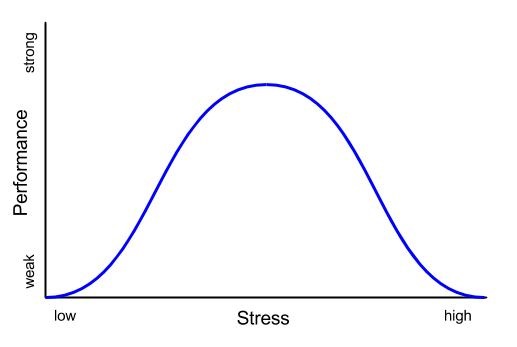
The Yerkes-Dodson Law suggests that there is an empirical relationship between stress and performance. Moderate levels of stress can help you concentrate and focus on a given task. However, extreme levels of anxiety can interrupt your concentration and interfere with your performance. Anxiety culminates into anxiety disorder when feelings of tension and worry become too excessive and hard to control, causes significant distress or impairment, and occurs more often than not for at least six months [2].   The chart below shows that performance level is strong when stress is moderate and hindered when stress is too low or too high.

Performance vs Stress Curve
Hebbian version of the Yerkes–Dodson law

It’s important to understand anxiety affects each person differently and symptoms can vary. Anxiety disorders are the most common mental disorder and affects approximately 30% of adults at some point in their lives [3]. The type of anxiety disorder can vary and range from generalized anxiety disorder to more specific phobias and panic disorder. Potential causes and symptoms of anxiety disorders include:


Possible Causes

  • Genetics
  • Stress from work, social settings, financials, trauma, etc.
  • Existential panic
  • Illict Abuse
  • Excess Caffeine Use
  • Lack of Sleep
  • Poor Diet
  • Lack of Exercise
  • High heart rate

  • Panic Attacks
  • Muscle tension
  • Irritability
  • Racing thoughts
  • High heart rate
  • Insomnia
  • Detachment from reality
  • Difficulty/inability to concentrate
  • Nausea
  • Fatigue
  • Shortness of breath

Symptoms


Coping strategies for Anxiety

A key component of anxiety is your body’s physical response; your heart rate and breathing speeds up and you perspire and feel tense. A state of relaxation is an important step in comprehensive treatment as it will help slow down or manage physical effects. It’s harder to feel anxious if you are already in a calm, relaxed state and it’s easier to calm yourself by practicing regular relaxation techniques. The elements that characterize a state of relaxation include:


Elements of Relaxation

  • Slow and even heart rate
  • Deep and even breathing
  • Loose and relaxed muscles
  • Hands and feet feel warm, heavy, or both
  • Mind feels at peace
  • The body has energy for several hours
  • Feeling refreshed

Coping Skills


The following 6 coping strategies can help slow down your heart rate and breathing pattern to manage your anxiety.


  • AWARE Method
  • Mediation
  • Visualization
  • Progressive Muscle Relaxation
  • Autogenic Relaxation
  • Diaphragmatic Breathing
AWARE Method

AWARE Method

One way you can reach a state of relaxation is by learning how to personally manage your symptoms and cope with the anxiety. Paradoxically, learning to accept your anxiety is an easy way to help you overcome it. Dr. Aaron Beck and colleagues developed a cognitive therapy tool for managing anxiety known as the AWARE method.

A W A R E

  • Accept the anxiety – Accept the anxious thoughts and feelings as natural.  Focus on feeling anxiety without becoming annoyed or frustrated with yourself. Greet it by saying “hello” out loud or to yourself when the anxiety appears.  Challenge yourself to be with the experience, not fight it. If you resist the anxiety you’re essentially prolonging the unpleasantness of it. Instead, you should just flow with it.
  • Watch your anxiety –  Look at it objectively, without judgement, and rate it on a zero to ten scale. Record the scores and see how your anxiety goes up and down. The more you can separate yourself from the experience, the more you can just watch it. Dissociate your basic self from the anxiety; be in the anxiety state, but not of it.
  • Act with your anxiety – Normalize the situation and function with it. Slow things down if you have to, but keep going and breathe slowly and normally.
  • Repeat as much as possible – Continue to work on accepting your anxiety, watch it, and act with it until it goes down to a comfortable level
  • Expect the best – Anticipate that your worried thoughts and fears won’t happen, because they rarely ever do. Expect that you will accomplish your goal, and if you experience anxiety along the way remember to accept, watch, and act with it. Don’t be surprised the next time you have anxiety but rather surprise yourself with how you handle it. Being aware of future anxiety will help place you in a better position to accept it when it comes again.

Mediation

Meditation

Meditation exercises produce deep physiological relaxation and feelings of peace and tranquility [5]. It involves an active process of focusing your attention on your breathing to the point where you abandon the constant loop of stress provoking thoughts.

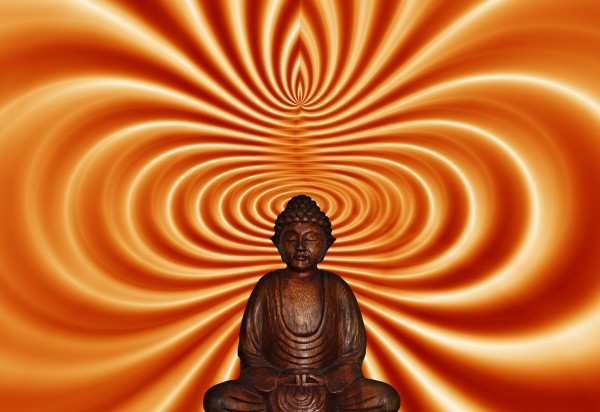
Meditation Statue

For example, think of a time when you were totally absorbed in a sensory experience such as listening to a beautiful piece of music or receiving a massage. You weren’t trying to analyze or manipulate the experience, you were just living it. This is similar to how your psychological posture should be during meditation.

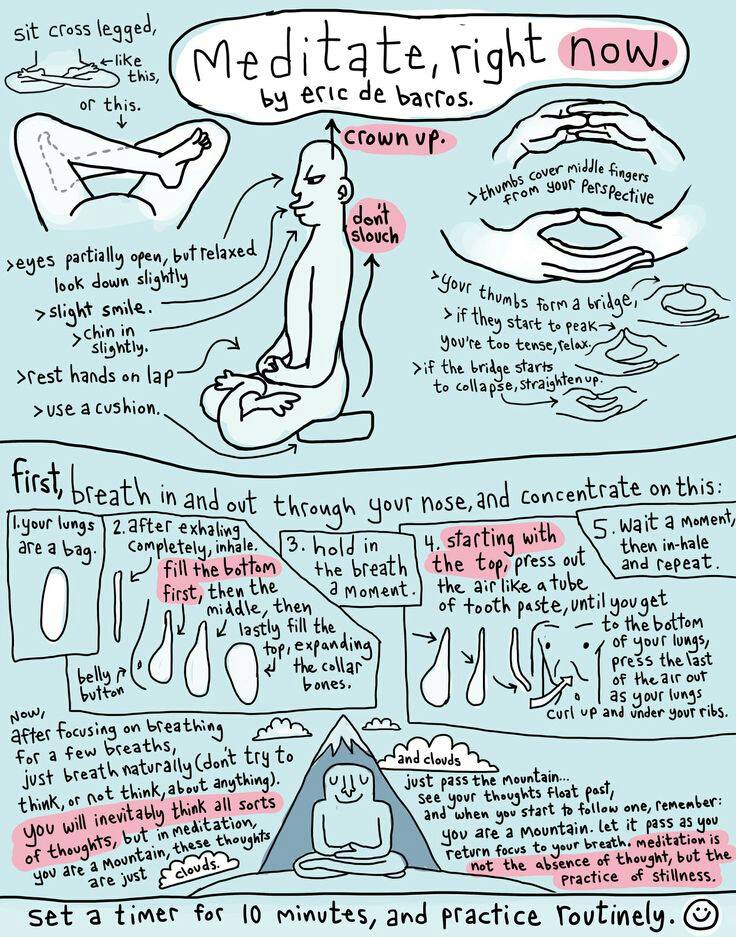
  • Start by making yourself as comfortable as possible
  • Close your eyes
  • Relax your breathing and allow it to naturally find its rhythm
  • Next, focus your attention on the movements of your chest and stomach as you’re breathing
  • Once you are aware of your attention wandering, bring it back to your breathing
  • Continue to let your mind wander as you breathe by using a mantra to keep your breathing natural

Meditation Guide

credit: https://redd.it/1xsu1a

Visualization

Visualization

Visualization practice combines a 4-4-8 breathing pattern with meditation practice. To do so:

  • start by inhaling for 4 seconds
  • holding for 4 seconds
  • and exhaling for 8 seconds
  • Repeat

Use your mind’s eye create a picture of a pleasant scene (your happy place).  For example, imagine you are walking on the beach. A cool fresh breeze blowing across your face and through your hair. As you are listening to the sounds of waves, you hear the birds singing across the beach.

Beach Visualization

Just imagine some experience that you personally find relaxing.  Focus on the details of the experience (sights, sounds, smells, feelings, etc.) and continue to breathe evenly and deeply. Open your eyes once you’ve reach a calm and relaxed state.

Progressive Muscle Relaxation

Progressive Muscle Relaxation

Another technique you can try is the Progressive Muscle Relaxation (PMR) relaxation method that involves tensing muscle groups and releasing them. Contrasting muscle tension with release can be very effective in managing the symptoms of stress, anxiety, and moments of panic/intense anxiety [4]. Begin in sequence and work progressively throughout all major muscle groups, tensing and relaxing them one at a time. It is helpful to practice this technique several times (when not anxious) so you can more easily cue yourself to the relaxed state.

TO BEGIN: Sit with your back fairly straight or lie down on a comfortable surface. Try keeping your eyes closed and take a deep breathing in through your nose. Feel free to listen to relaxing music, if desired.

As you breathe deeply, focus your attention on your feet.

Toes – Curl your toes as tightly as you can and hold for five seconds. Relax.

Calves – Flex feet to tighten calves and hold for five seconds. Relax.

Thighs – Tighten your thigh muscles by pressing your knees together as tightly as you can for five seconds.

Hips and buttocks – Flex your hip and buttock muscles for five seconds. Relax.

Stomach – Focus on your belly button, take a deep breath in, release that breath, and tighten stomach muscles.

Shoulders – Move your shoulders forward, squeeze chest muscles and hold for five seconds. Relax.

Hands – Extend your arms in front of you. Clench your fists tightly for five seconds. Relax. Feel the warmth and calmness in your hands as you release.

Upper arms – Bend your elbows. Tense your biceps for five seconds. Relax. Feel the tension leave your arms.

Back – Squeeze shoulder blades together and hold for five seconds. Relax. Feel the anxiety and tension leave your body as you relax.

Forehead – Wrinkle your forehead; try to make your eyebrows touch your hairline for five seconds. Relax.

Eyes and nose – Close your eyes as tightly as you can for five seconds. Relax.

Lips, cheeks, and jaw – Tighten your lips, cheeks, and jaw and hold for five seconds. Relax. Feel the warmth and calmness in your face.

Focus on any muscles that may still feel tense. Breathe in for three seconds, hold for three seconds, and release for five seconds – releasing any remaining tension.

Once you begin to feel relaxed, focus your attention on feeling warm or as if you were on a sunny beach. Let the light and warmth travel throughout your relaxed body. Feel the waves come in and out with your breathing. Stay in this moment.

TO END: Slowly become aware and active. Become aware of your feet pressing on the floor, feel your body on the chair. Take five deep breaths with each breath becoming more alert. Wiggle your fingers and your toes [4].

Autogenic Relaxation

Autogenic Relaxation

Once you’ve learned to relax your muscle groups using the progressive muscle technique you can begin autogenic relaxation. This method teaches your body to respond to verbal commands so that you can achieve relaxation and reduce anxiety. Once you assume a comfortable position, close your eyes and slowly recite these instructions:

  1. My hands and arms are heavy and warm (5 times)
  2. My feet and legs are heavy and warm (5 times)
  3. My abdomen is warm and comfortable (omit if you have ulcers) (5 times)
  4. My breathing is deep and even (5 times)
  5. My breathing is calm and regular (10 times)
  6. My forehead is cool (5 times)
  7. When I open my eyes I will remain relaxed and refreshed (3 times)
  8. Perform the following sequence of body movements:
    • Move hands and arms about
    • Move feet and legs about
    • Rotate head
    • Open eyes and sit up

Diaphragmatic Breathing

Diaphragmatic Breathing

You can also manage your anxiety with this intentional breathing technique. Most people aren’t aware that deep breathing actually makes use of the body’s built-in natural relaxation response, which occurs when we exhale. You can use a deep diaphragmatic breathing technique to reduce your anxiety with deep breathes. This method uses a 3-3-5 breathing pattern:

  • Inhale for 3 seconds
  • Hold for 3 seconds
  • Exhale for 5 seconds

Make sure to breathe slowly and evenly with your mouth closed. Take notice of what you’re feeling throughout your body while exhaling; your muscles might feel warm and begin to feel light or heavy. Try and let yourself enjoy whatever sensations you’re experiencing. Repeat the diaphragmatic breathing exercise until you feel relaxed.


Professional Treatment for Anxiety Disorder

While these techniques are useful for managing symptoms of anxiety, there are proven treatment options that help fight against anxiety disorders such as

Psychotherapy attempts to help a patient identify triggers of his/her anxiety and learn cognitive behaviors to help deal with the issues.

Pharmacotherapy and diet/exercise management can improve serotonin levels in the brain and stabilize mood – an effective option for treating anxiety symptoms [6].

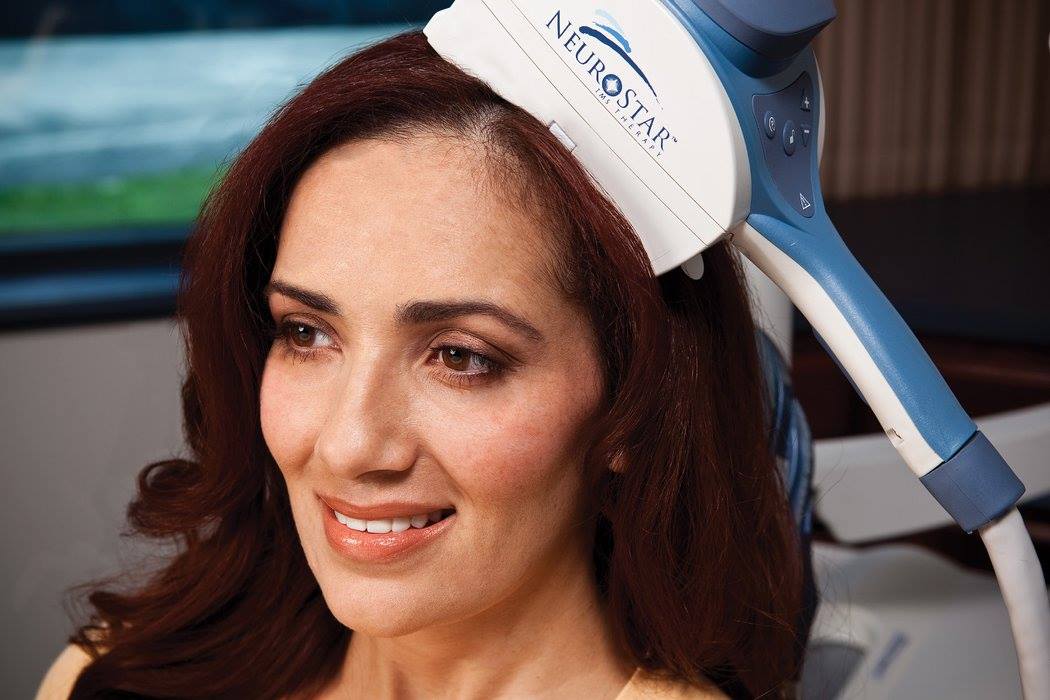
TMS is a non-invasive, outpatient treatment option that uses a pulsed magnetic field to stimulate function in specific regions of the brain and help treat anxiety. Researchers investigated how effective TMS is as a treatment option for generalized anxiety disorder and the results suggest 84.6% of patients’ anxiety symptoms were in remission [7].

IOPs are useful for providing cognitive behavioral therapy (CBT), Dialectical Behavioral Therapy(DBT), crisis stabilization, and motivational and supportive therapy. IOPs show to be effective through continual support from the group and clinical team as they provide a steady increase in motivation, self-esteem, safety and security, and decrease unwanted behaviors associated with anxiety such as anxiousness and irritability [8].

All of us experience anxiety, and while oftentimes you can manage it, you shouldn’t wait until your symptoms reach a critical stage before seeking professional help. If you think you might be suffering from anxiety and personal strategies aren’t working to manage it, consider consulting a mental health professional. Effective treatment options vary from person to person, so start by talking to a psychiatrist or therapist and learn what works best for you.


References

[1] Anxiety. (n.d.). Retrieved from American Psychological Association website: http://www.apa.org/topics/anxiety/

[2] Baldwin, D., MA, DM FRCPsych. (2017, May). Generalized anxiety disorder in adults: Epidemiology, pathogenesis, clinical manifestations, course, assessment, and diagnosis (M. B. Stein, MD, MPH & R. Hermann, MD, Eds.). Retrieved from https://www.uptodate.com/contents/generalized-anxiety-disorder-in-adults-epidemiology-pathogenesis-clinical-manifestations-course-assessment-and-diagnosis/print?source=search_result&search=gad&selectedTitle=1~55

[3] Parekh, R., M.D., M.P.H. (Ed.). (2107, January). What are anxiety disorders? Retrieved from https://www.psychiatry.org/patients-families/anxiety-disorders/what-are-anxiety-disorders

[4] Christenen, K., MA, (n.d.). A Guide to Progressive Muscle Relaxation. Retrieved from https://urbanbalance.com/guide-progressive-muscle-relaxation/

[5] Wallace, K. (1970). Physiological Effects of Transcendental Meditation. American Association for the Advancement of Science, 167(3926), 1751-1754. http://science.sciencemag.org/content/167/3926/1751

[6] Young, S. N. (2007). How to increase serotonin in the human brain without drugs. Journal of Psychiatry & Neuroscience : JPN, 32(6), 394–399.

[7]  White, D., & Tavakoli, S. (2015). Repetitive transcranial magnetic stimulation for treatment of major depressive disorder with comorbid generalized anxiety disorder. Annals of Clinical Psychiatry: Official Journal of American Academy of Clinical Psychiatrists, 27(3), 192-206. Retrieved from https://www.ncbi.nlm.nih.gov/pubmed/26247218

[8] Davila, M., MD (Ed.).(n.d.) Adult Mental Health IOP. Retrieved from https://awakeningskc.com/intensive-outpatient-programs/


pills-medication-tablets-bottle-drugs-drugstore-1-1-1200x559.jpg

June 1, 2017 0


Opioid dependency has become one of our nation’s largest and most problematic epidemics. In 2012, more than 250 million prescriptions were written for opioids in the United States, which is enough for every adult to have their own bottle of pills
[1].  Opioids are drugs that interact with the opioid receptors on nerve cells in the brain. Once attached, the drug reduces pain and produces a euphoric sensation throughout the body, commonly referred to as a “high”. Common opioids are oxycodone, hydrocodone, heroin, codeine, morphine, and other illegal and legally prescribed painkillers. Most victims of opioid dependency are average day Americans with chronic pain and become dependent on prescription painkillers. In fact, 4 out 5 new heroin users started out misusing their prescription pain medications [2].

Scope of the Opioid Epidemic

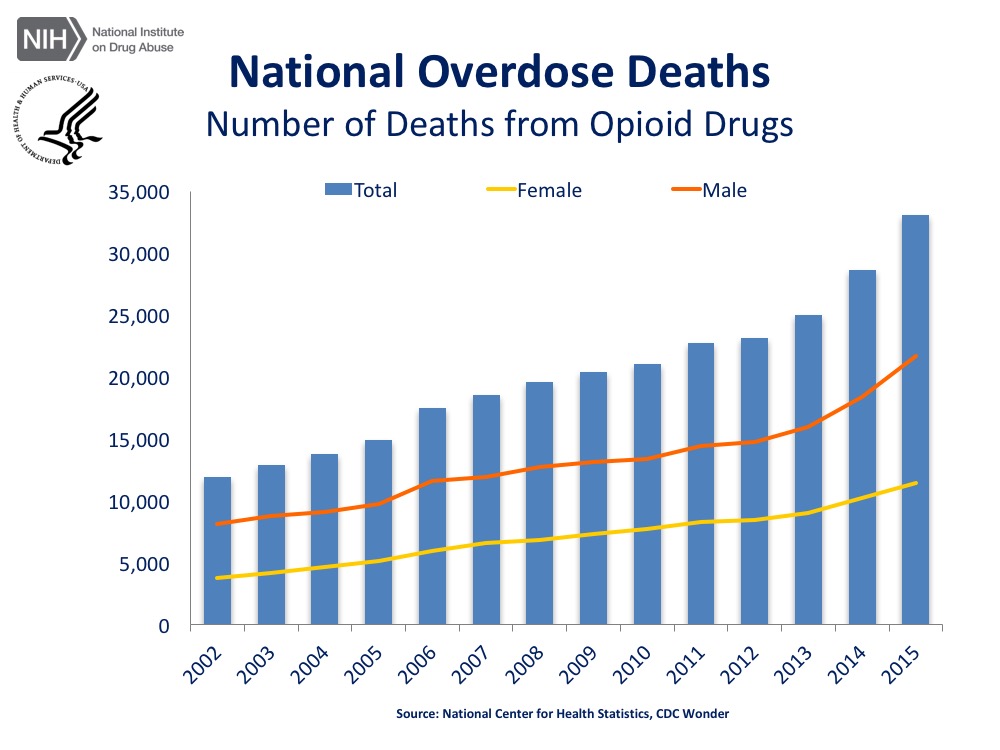
  • Every day, approximately 90 Americans overdose and die from opioid abuse [3]
  • The number of opioid-related deaths has nearly tripled since 2002 [4]
  • In 2015 alone, opioid overdose killed more Americans than car crashes, gun deaths, and gun homicides respectively [5]
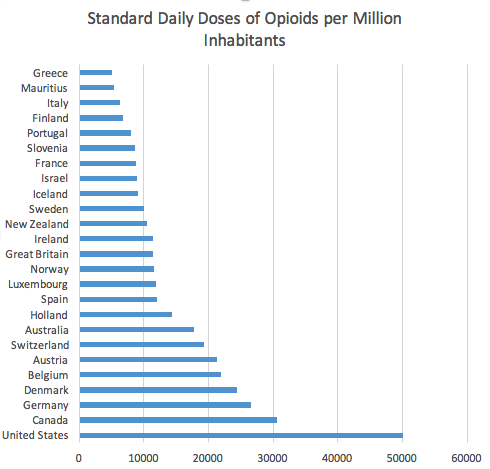
  • Americans consume more opioids than any other country in the world, beating the second largest consuming country by over 61% [5]

Source: United Nations International Narcotics Control Board

When Does Opioid Use Become a Problem

When regulated properly, opioid use is an effective way to treat acute pain that arises from surgery or injury. Endorphins are natural painkillers the body produces, but sometimes the endorphins alone aren’t enough to subdue pain. Opioids act as synthetic endorphins when they attach to the opioid receptor. While this treatment option is fine as a short term solution, misuse can lead to unintended consequences such as dependency and tolerance( the need for higher doses). As the opioid use continues, the body stops producing these natural endorphins because the synthetic endorphins produced by the opioids tricks the body into thinking the natural endorphin levels are normal. The mind and body experience withdrawals when a person using opioids regularly tries to stop consuming opioids suddenly. The lack of endorphins causes the following withdrawal symptoms:

  • Mental cravings
  • Shakes
  • Anxiety
  • Depression
  • Sweating
  • Insomnia
  • Flu like symptoms

Along with dependency and withdrawal issues, opioid abuse overdose can lead to fatal consequences. Some common signs/symptoms of opiate overdose are pinpoint pupils, unconsciousness, and respiratory depression. Respiratory depression is a major concern associated with opioid use. The medulla oblongata is a part of the brain that is responsible for breathing and opioids interrupt that function. When a person overdoses from opioids the respiratory receptors are blocked and breathing stops, resulting in death.

Combining opiates with other sedating substances can increase a person’s risk of respiratory depression and death. The use of opiates with alcohol, even a small amount, benzodiazepines such as: alprazolam (Xanax), lorazepam (Ativan), clonazepam (Klonpin), temazepam (Resotril), diazepam (Valium) to name a few, and/or muscle relaxers can increase a person’s chance of overdose, respiratory depression and death.

How It’s Treated

There are proven treatment options that help fight opioid dependency such as psychotherapy, IOPs, naltrexone, buprenorphine, etc. Naltrexone and buprenorphine act as opioid antagonists which effectively substitutes for a full agonist opioid (such as those listed above) and stabilizes a person’s brain chemistry. The antagonist stops the development of further opioid tolerance by blocking the receptors in the brain and prevents the ability to feel high. The antagonists are useful in preventing relapse and help fight opioid dependency altogether. Naltrexone and buprenorphine have other favorable pharmacologic properties and are well-tolerated by most. They are part of a harm reduction strategy and are extremely helpful adjunct to comprehensive treatment of opioid dependency.

You can overcome your opioid dependency by taking the first step and seeking help. Effective treatment options vary from person to person, so start by talking to a psychiatrist or therapist and learn what works best for you.

What To Do If Someone Is Overdosing

Some common signs/symptoms of opiate overdose are pinpoint pupils, unconsciousness, and respiratory depression. What can you do if you, a friend, or loved one is experiencing an overdose? Act Fast. Call 911 and administer the antidote for opiates called naloxone (Narcan). It is similar to an EpiPen and can save a life. Do not hesitate to call 911 for help because you are worried about getting in trouble. You could end up saving someone’s life.
A recent survey in the US found that the distribution of approximately 50000 naloxone kits through local opioid overdose prevention programs had resulted in more than 10000 uses to reverse overdoses[6].

  1. 7 Centers for Disease Control and Prevention. (2014). Opioid Painkiller Prescribing, Where You Live Makes a Difference. Atlanta, GA: Centers for Disease Control and Prevention. Available at http://www.cdc.gov/vitalsigns/opioid-prescribing/.
  2. Jones CM. Heroin use and heroin use risk behaviors among nonmedical users of prescription opioid pain relievers – United States, 2002-2004 and 2008-2010. Drug Alcohol Depend. 2013 Sep 1;132(1-2):95-100. doi: 10.1016/j.drugalcdep.2013.01.007. Epub 2013 Feb 12
  3. Rudd RA, Seth P, David F, Scholl L. Increases in Drug and Opioid-Involved Overdose Deaths — United States, 2010–2015. MMWR Morb Mortal Wkly Rep. 2016;65. doi:10.15585/mmwr.mm655051e1.
  4. Overdose Death Rates. (2017, January). Retrieved from National Institute on Drug Abuse website: https://www.drugabuse.gov/related-topics/trends-statistics/overdose-death-rates
  5. Lopez, G., & Fronsten, S. (2017, March 29). How the opioid epidemic became America’s worst drug crisis ever, in 15 maps and charts [Blog post]. Retrieved from Vox website: https://www.vox.com/science-and-health/2017/3/23/14987892/opioid-heroin-epidemic-charts
  6. Information sheet on opioid overdose. (n.d.). Retrieved June 01, 2017, from http://www.who.int/substance_abuse/information-sheet/en/

10828056_602045383273448_1404043181635829106_o.jpg

May 8, 2017 0

Transcranial Magnetic Stimulation (TMS) is a treatment for Major Depressive Disorder (commonly known as depression) that is gaining recognition for its success rate. We provide free consultations to see if TMS is right for you. In our office, we have had over 200 patients go through the TMS treatment since 2013. Of those who did it, 66% achieved full remission from depression and 90% had a positive response to the TMS treatment. Here are 6 facts on how TMS can treat your depression.

Works Cited

  1. Ranna Parekh, M. M. (2017, January). What is Depression? Retrieved from psychiatry.org: https://www.psychiatry.org/patients-families/depression/what-is-depression
  2. Ph.D., E. S. (2014, August 7). Are Antidepressants Effective? Retrieved from psychologytoday.com: https://www.psychologytoday.com/blog/how-everyone-became-depressed/201408/are-antidepressants-effective
  3. What causes depression? (2017, April 11). Retrieved from Health.harvard.edu: http://www.health.harvard.edu/mind-and-mood/what-causes-depression
  4. Staff, M. C. (2015, December 03). mayoclinic.com. Retrieved from Transcranial Magnetic Stimulation: http://www.mayoclinic.org/tests-procedures/transcranial-magnetic-stimulation/details/risks/cmc-20163840


April 25, 2017 0


Mental health awareness grows every day, especially when celebrities speak out publicly. Last week, Lady Gaga and Prince William shared a conversation about mental health on YouTube. Lady Gaga shares her personal story about mental health personally affecting her life. In her open letter, Gaga describes the struggle of living with Post Traumatic Stress Disorder (PTSD).

She expressed feeling ashamed to open-up about struggling with mental health because she is wildly successful, has the love of her friends and family, and lives a life of luxury. It seemed as if she should have no excuse to complain about her life when other people struggle to find a place to sleep or their next meal.

As Prince William stated, Lady Gaga’s open letter is a good example of the attitude we need take towards mental health. No one should keep the pain to themselves and feel alone.

Everyone deals with mental health, as they do with physical health. When we break our bones, we seek treatment as fast as we can. We know that masking the pain with drugs works temporarily, but it doesn’t do anything to fix the problem at hand. The longer we go without treating that broken bone, the worse the break is going to be. Then everyday tasks that were not given a second thought eventually become a struggle to complete. At a certain point, the pain is so agonizing that we begin to lose motivation to do any of those everyday things like get out of bed.

The same goes for mental health; the longer we wait to open up to someone, the harder it becomes. No one, not even the rich and famous, is immune to the issues that challenge our well-being such as depression, anxiety, stress, etc. Do not be afraid to share with friends and family how you actually feel and seek the treatment you may need. Sometimes, the best medicine in the world is words of encouragement that help people who feel ashamed of an invisible illness to overcome their shame and feel free.

References

[Lady Gaga]. (2017, April 17). Lady Gaga + Prince William | Heads Together | #oktosay [Video File]. Retrieved from https://youtu.be/73WmwtJM-50

Lady Gaga (2016, Dec 6). “Head Stuck in a Cycle I Look Off and I Stare” A personal letter from Gaga. Retrieved from
https://bornthisway.foundation/personal-letter-gaga/


171a7a_111b718429b34276a954a256f263fff3mv2-1200x797.jpg

September 13, 2016 0

With her memoir set for publication on Tuesday, retired U.S. women’s soccer star Abby Wambach is opening up about her years of substance abuse. In an interview with the Associated Press, she said her arrest on a DUI charge in April served as a wake-up call.

“I was stubborn and I was in denial,” she said. “I didn’t want to face the truth.”

Wambach was charged with DUI after police in Portland, Ore., pulled her over for running a red light in the early morning of April 3. According to the arrest records, she admitted to using marijuana and cocaine in the past. Wambach eventually pleaded guilty, entering a diversion program for first-time offenders, and posted a message on Facebook immediately following her arrest in which she took full responsibility for her actions.


171a7a_6f317a84249841a48fa23efd74b59fd3mv2_d_2048_1360_s_2-1200x797.jpg

September 10, 2016 0

Noninvasive brain stimulation is a promising therapy for a wide range of psychiatric and neurological issues, but it’s attracted the attention of a group that has some researchers worried: people who are willing to self-administer brain stimulation to boost brain function.

“As clinicians and scientists who study noninvasive brain stimulation, we share a common interest with DIY [do-it-yourself] users … to improve brain function,” wrote Michael Fox, M.D., Ph.D., associate director of the Berenson-Allen Center for Noninvasive Brain Stimulation at Beth Israel Deaconess Medical Center in Boston and colleagues in a recent open letter in the Annals of Neurology. “However … there is much about noninvasive brain stimulation in general, and tDCS [transcranial direct current stimulation] in particular, that remains unknown.”


171a7a_a2fdba36f40742f1aaec6b5cfb6ff542mv2.jpg

September 8, 2016 0

A survey of laws and policies of 193 United Nations (UN) member states reveals a significant level of discrimination against individuals with mental illness in the areas of marriage, voting rights, and employment, among others.

Key findings of the survey, funded by the World Psychiatric Association (WPA) and released September 5 on World Mind Matters Day, include the following:


171a7a_3aa64720569345d087c4633aa05bd599mv2_d_2000_1499_s_2-1200x899.jpg

September 2, 2016 0

We often wonder if there are things that we are doing in our daily routine that actually increase our feelings of depression and anxiety. We also wonder if there are simple changes that we can make in our lives to decrease these feelings and provide us some relief. There are indeed things that we don’t think twice about during our day that add to our feelings of depression and anxiety, as well as unassuming changes that we can make in our lives, without much effort, to help reduce these feelings. We will discuss both below. We will talk over the things that increase depressive and anxious feelings while discussing what we can do about them. The changes will likely be far simpler than you have ever thought.


For Life-Threatening Emergencies Call 911
 
Here at Awakenings we pride ourselves in restoring hope. Please contact us to begin your journey today.

Location

Awakenings KC
5300 W 94th Terrace #200,
Prairie Village, KS 66207

Select Language

X